When You Know Your Turnips Are Ready
Learning Download: How to Grow Turnips
From Seed to Harvest: A guide to growing turnips.
Turnips are a unique vegetable in which both parts, the root and the leafy greens on the elevation, tin can be eaten. Some turnips are grown primarily for their turnip greens, while others are grown to harvest the root. Turnips are ordinarily used in soups or stews and the turnip greens can be used in salads or cooked.
To found:
Since turnips are a root plant, they don't always transplant well from indoors to the garden. Turnips are hardy and can withstand frost, so sow directly into the garden five weeks before the terminal frost date. Plant seeds 1/2 inch deep and 1 inch apart in rows set 1 foot apart in rows prepare i foot apart. Turnips can be grown twice, during the spring and during the autumn. Practise not abound turnips over the summertime. If growing in the fall, establish the seeds most the end of the summertime. Stagger turnip planting to every ten days to allow for a continual harvest. Prior to planting, be sure to till the soil and remove whatever debris to permit space for the turnip root to grow underground.
To grow:
Once seedlings appear, thin to every four inches. Provide ample watering for the turnips because one of the biggest causes of a root with a woody texture is dry soil. Like most vegetables, turnips prefer full sun just if they are grown solely for their leaves, they will tolerate partial shade. Turnips tin can take problems with pests similar slugs, snails and aphids, but the turnip growing season is short and then typically the vegetable is harvested earlier the pests go an consequence.
To harvest:
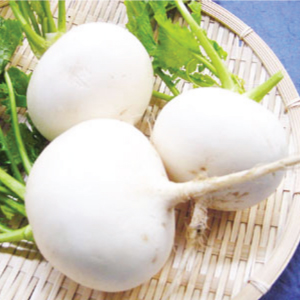
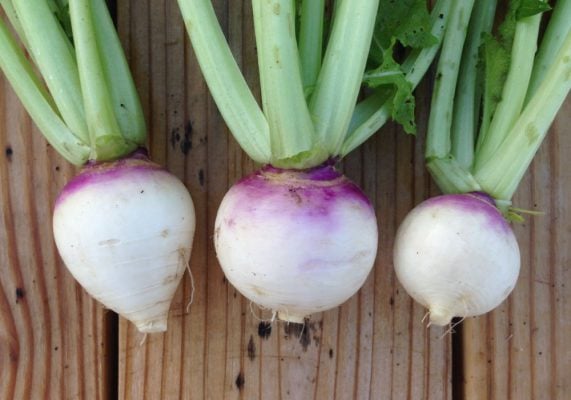
Turnips are ready to harvest 40 to 55 days after planting. If harvesting the leaves, they are ready when they reach iv-6 inches in superlative. If simply harvesting the leaves, cut them from the constitute when they attain the desired size, leaving one inch of leaves in a higher place the crown of the constitute. More leaves will grow in their identify. If harvesting the whole plant, gently dig the turnip from the ground. If harvesting for both the root and the leaves, the turnip should be nearly ii inches in diameter, but if the leaves take been harvested offset, the turnip should exist 3 inches in diameter when it is ready to be pulled. Pick turnips when they are smaller for a milder, sweeter flavor.
What turnips crave:
Prior to planting, piece of work compost and an all-purpose fertilizer like a x-10-10 variety into the height 6 inches of soil. How y'all fertilize turnips will depend on what you are growing them for. If y'all are only growing turnips for the turnip greens, use a fertilizer loftier in nitrogen as it encourages leafy growth. Apply a side dressing of 34-0-0 or 21-0-0 six weeks after the plant emerges. Employ a more balanced fertilizer if growing for the roots.
Where to purchase turnip seeds:
You can notice different types of turnips at Urban Farmer.
Learning Download: Mutual pests and diseases: Turnips
Common pests and diseases: Turnips
When growing vegetables, it is ever exciting to care for the found throughout its growing phase and then harvest it for delicious recipes afterwards, simply one matter to picket out for is pests and disease. Different plants are susceptible to different types of pests and diseases, and information technology is important to make yourself aware so yous tin can proceed a watchful middle and also take any preventative methods to go along your plants safe throughout their lifespan.
Turnips tin can fall victim to several different pests and diseases.
Pests:
Some of the mutual pests affecting turnips include aphids, wireworms and root maggots.
Aphids are soft-bodied insects that bring problems to lots of plants. They create discoloration of the leaves, necrotic spots and stunted growth. Utilise tolerant varieties and only utilize insecticides if in that location'due south a high infestation.
Wireworms will cause seedlings to die and likewise crusade girdled stems. Till the soil frequently to reduce the corporeality of wireworms and rotate crops to a non-host crop the following year if possible.
Root maggots will cause scars on the surface of the turnip and feeding tunnels as well. The damage done to the roots may be extensive. The larvae are white and yellowish in color and the adult resembles a horsefly. To manage this, avert planting crops in the aforementioned area the following year if you notice a problem. Utilize floating row encompass to forbid the females from laying eggs.
Diseases:
Some of the mutual diseases affecting turnips include Alternaria foliage spot, clubroot, downy mildew and white spot.
Alternaria foliage spot causes pocket-sized, dark spots on the leaves which will then turn brown or grayness. This disease favors absurd, wet weather condition. To prevent this from happening, plant only pathogen-costless seed, practice crop rotation and apply the appropriate fungicides when needed.
Clubroot causes slow growing or stunted plants with leaves that xanthous during the day, wilt during the 24-hour interval and then become rejuvenated at night. To preclude this from happening, plant only disease-free seed and use lime to the soil.
Downy mildew causes lesions on the upper surface of the leaves and a white growth on the lesser of the leaves. It favors cool, damp atmospheric condition. To preclude, remove all crop droppings and rotate crops.
White spots causes small, necrotic, brown spots on the leafage tips or the margins of the leaves, and the brownish will mature to a low-cal greyness or a white color. These lesions may cause defoliation, and the disease is more likely to emerge in cool and wet conditions. To prevent this from happening, practice crop rotation and removing weeds because there is no known found resistance to white spot. As well, yous tin can apply the appropriate fungicides to assistance fight the disease.
Source: https://www.ufseeds.com/turnip-seed-to-harvest.html#:~:text=Turnips%20are%20ready%20to%20harvest,will%20grow%20in%20their%20place.
0 Response to "When You Know Your Turnips Are Ready"
Post a Comment